
Iranian gunboats confronting a US oil tanker in the Strait of Hormuz has once again brought global attention to one of the world’s most sensitive maritime corridors. The incident, reported by OilPrice.com, unfolded as a US-flagged tanker transited the narrow waterway that carries nearly one-fifth of global oil supplies. Although the situation did not escalate into violence, the approach by Iranian vessels sent a strong geopolitical signal and immediately reignited concerns about energy security, maritime safety, and oil market stability.
The Strait of Hormuz has long been a pressure point between Tehran and Washington, but each new oil tanker confrontation reinforces how quickly geopolitical friction can spill into global energy logistics. For energy traders, shipping operators, insurers, and policymakers, such events serve as a reminder that energy supply routes remain deeply exposed to regional tensions.
According to OilPrice.com’s reporting, Iranian gunboats approached a US-flagged oil tanker while it was passing through the Strait of Hormuz. The tanker ultimately continued its journey without physical harm or seizure, but the maneuver by the Iranian vessels was widely interpreted as a deliberate show of force. Maritime sources indicated that the interaction occurred in international waters, though Iranian narratives suggested the vessel was warned after allegedly entering territorial zones.
This type of close naval encounter is not unprecedented in the region, but each occurrence carries weight due to the strategic importance of the waterway. Even without gunfire or boarding attempts, the mere presence of armed Iranian boats near a US oil tanker introduces risk perceptions that ripple through energy markets and shipping insurance calculations.
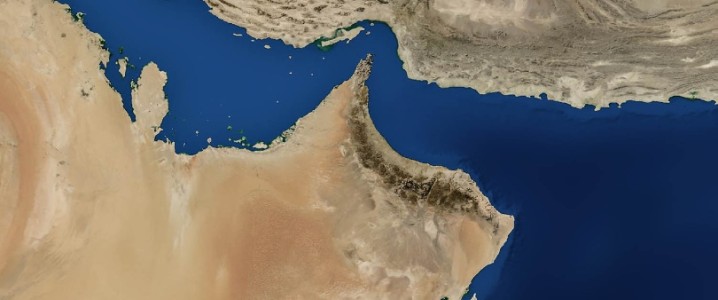
The Strait of Hormuz is arguably the most strategically important maritime chokepoint in the world. It connects the Persian Gulf with the Gulf of Oman and the Arabian Sea, serving as the primary export route for major oil producers including Saudi Arabia, Iraq, the UAE, Kuwait, and Iran itself. Any threat to navigation in this corridor has immediate implications for global crude oil flows.
When Iranian gunboats interact with a US oil tanker in this environment, markets interpret the event not as an isolated naval gesture but as a potential signal of broader instability. Oil prices historically react to even minor disruptions in the strait because the global energy system has limited redundancy for replacing volumes that pass through this route daily.
The confrontation should be understood within the broader context of Iran US tensions in the region. Tehran frequently uses maritime maneuvers as a form of strategic signaling, demonstrating its capacity to influence shipping lanes without necessarily crossing into open conflict. These actions are often calibrated to assert regional authority while avoiding escalation that could trigger direct military retaliation.
For Washington, ensuring freedom of navigation in the Strait of Hormuz is a long-standing strategic priority. The presence of US naval assets in the region is specifically intended to deter interference with commercial shipping. Incidents like this oil tanker confrontation test those deterrence dynamics and highlight the delicate balance between power projection and conflict avoidance.
Although no oil supply was disrupted, markets are highly sensitive to developments involving Iranian gunboats and US oil tankers in Hormuz. Traders often add a geopolitical risk premium to crude prices when tensions flare in the Middle East. Even the perception of potential instability can influence Brent and WTI benchmarks.
Shipping companies and insurers are equally attentive. War-risk premiums for vessels transiting the Strait of Hormuz can rise following such incidents, increasing transportation costs and indirectly affecting global energy pricing. This illustrates how geopolitical tension translates into tangible economic effects even in the absence of direct conflict.
Iranian sources suggested that the tanker may have entered restricted waters and was warned accordingly, while international maritime accounts emphasized that the vessel remained in international shipping lanes. These differing narratives are common in Strait of Hormuz incidents, reflecting longstanding disputes over maritime jurisdiction and freedom of navigation.
Such disagreements complicate diplomatic resolution because each side frames the event within its own legal and strategic perspective. For global energy stakeholders, however, the legal debate is secondary to the operational reality that the strait remains a high-risk transit zone.
This latest episode reinforces several key lessons for energy security planning. First, critical energy corridors remain exposed to regional geopolitical dynamics that can flare with little warning. Second, non-violent military encounters can still create substantial market anxiety and financial impact. Third, the Strait of Hormuz will continue to be a focal point for Iran US tensions as long as it remains central to global oil trade.
Governments and energy companies continue exploring alternative routes, strategic reserves, and diplomatic mechanisms to mitigate this vulnerability, but geography limits how much diversification is realistically possible.
The interaction between Iranian gunboats and a US oil tanker in the Strait of Hormuz serves as a vivid reminder that global energy supply chains depend on politically sensitive geography. While the incident ended without escalation, it underscores how quickly tensions can translate into market concern and operational risk.
For energy industry professionals, this event is not merely a news headline but an operational signal about the persistent fragility of the world’s most important oil transit corridor. As long as Iran US tensions persist, the Strait of Hormuz will remain a stage where geopolitics and energy security intersect in ways that affect the entire global market.