
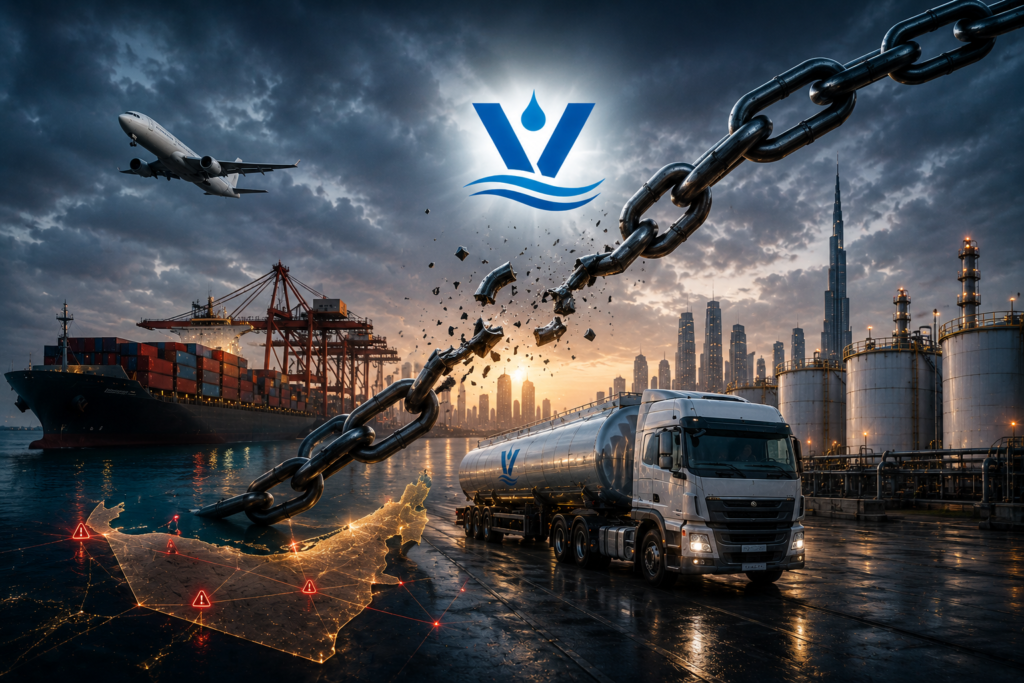
Fuel supply chain disruptions in the UAE have become an increasingly important concern for businesses operating across transportation, logistics, manufacturing, construction, aviation, marine services, and industrial operations. As one of the world’s most strategically positioned energy and trade hubs, the United Arab Emirates depends heavily on highly efficient fuel logistics networks to support economic activity and maintain commercial stability. Even short-term interruptions in fuel availability, transportation routes, or refinery operations can create ripple effects throughout the economy, affecting operational efficiency, transportation costs, inventory management, and long-term business planning. In an environment where supply reliability directly influences profitability and competitiveness, businesses across the UAE are paying closer attention to fuel supply chain resilience than ever before.
The UAE’s economy is deeply connected to global energy trade and regional logistics infrastructure. Dubai, Abu Dhabi, Fujairah, and other major commercial centers rely on uninterrupted fuel distribution to sustain transportation networks, industrial facilities, airports, shipping terminals, and construction activity. Fuel is not only essential for vehicles and machinery but also for power generation, backup systems, marine transport, and industrial production processes.
Fuel supply chain disruptions UAE businesses face today are often linked to a combination of geopolitical tensions, shipping route vulnerabilities, fluctuating oil prices, refinery maintenance schedules, and broader global supply chain instability. Because the UAE operates as a major regional logistics gateway connecting Asia, Europe, and Africa, disruptions in fuel movement can rapidly influence commercial operations across multiple sectors simultaneously.
Businesses operating in the UAE have become increasingly aware that fuel availability is closely tied to operational continuity. Rising transportation expenses, delays in fuel deliveries, and fluctuations in energy pricing can significantly affect business performance. Industries with fuel-intensive operations are particularly vulnerable because even modest supply interruptions can increase operational costs and reduce productivity.
One of the most immediate effects of fuel supply chain challenges UAE companies encounter is operational disruption. Logistics companies, freight operators, and transportation fleets rely on predictable fuel access to maintain delivery schedules and service reliability. When fuel supply becomes unstable, transportation routes may need adjustment, operating schedules may change, and costs associated with fuel procurement can increase substantially.
Construction and infrastructure projects are especially sensitive to fuel logistics UAE disruptions. Heavy machinery, generators, transport vehicles, and onsite operations require consistent fuel supply to maintain productivity. Delays in fuel deliveries can halt critical project activities, extend timelines, and increase labor and equipment costs. In sectors where contractual deadlines are strict, these disruptions can create significant financial and reputational risks.
Manufacturing facilities also face operational vulnerabilities during fuel supply disruptions. Industrial plants often depend on fuel-powered systems for production equipment, heating processes, backup power generation, and internal transportation. Any interruption in supply may reduce production efficiency and disrupt inventory planning. Businesses operating under just-in-time manufacturing models are particularly exposed because supply interruptions leave little room for operational flexibility.
The aviation and marine industries represent another major area of concern. Airports, cargo terminals, shipping ports, and marine bunkering facilities depend heavily on stable fuel distribution systems. The UAE’s position as a major aviation and maritime hub means disruptions in fuel availability can quickly affect international trade flows and transportation reliability.
The financial impact of fuel supply chain disruptions extends well beyond higher fuel prices. Increased transportation costs, delayed shipments, production slowdowns, and operational inefficiencies can affect profitability across entire industries. Businesses often face rising expenses related to emergency fuel procurement, alternative transportation arrangements, and inventory management adjustments.
Small and medium-sized enterprises are particularly vulnerable because they may lack the financial flexibility and storage infrastructure required to manage prolonged supply instability. Larger corporations often have contingency reserves, long-term supply agreements, and diversified sourcing strategies that help reduce operational risk. However, even major organizations experience financial pressure when global energy markets become volatile.
Fluctuating fuel costs also affect consumer pricing across the UAE economy. Transportation expenses influence the cost of goods distribution, food supply chains, retail operations, and industrial services. As fuel prices increase or become unstable, businesses frequently pass a portion of those costs onto consumers, contributing to broader inflationary pressures.
Investment planning is another area heavily affected by supply uncertainty. Companies considering expansion projects, logistics investments, or industrial development initiatives must account for energy reliability and fuel cost projections. Persistent supply chain disruptions can delay capital investment decisions and reduce confidence in long-term operational forecasting.
Fuel supply chain disruptions UAE businesses experience are closely linked to geopolitical developments across the Middle East and global energy markets. The Strait of Hormuz remains one of the world’s most critical energy transit corridors, handling a substantial share of global oil and LNG exports. Any instability affecting maritime security in the Gulf region can influence shipping routes, insurance costs, fuel availability, and energy pricing.
Regional tensions, shipping disruptions, sanctions policies, and international trade conflicts all contribute to supply chain vulnerability. Even when physical fuel shortages do not occur, uncertainty surrounding energy transportation routes often increases market volatility and operational risk.
Global events also influence UAE fuel logistics. Refinery outages in major exporting countries, disruptions in global shipping networks, and fluctuations in international oil production can affect fuel imports, refined product availability, and distribution efficiency. The interconnected nature of modern energy markets means UAE businesses must monitor both regional and international developments closely.
Climate-related disruptions are becoming increasingly important as well. Extreme weather events affecting ports, shipping lanes, and infrastructure can interrupt fuel transportation and create logistical bottlenecks. Rising temperatures and changing environmental conditions also place additional stress on fuel storage and transportation systems across the region.
Businesses across the UAE are adopting more advanced risk management and contingency planning strategies to reduce exposure to fuel supply disruptions. One of the most common approaches involves diversifying fuel sourcing arrangements. Companies increasingly work with multiple suppliers to reduce dependence on single distribution channels and improve supply flexibility during periods of market instability.
Strategic fuel storage has also become more important. Businesses managing large transportation fleets or industrial operations are investing in expanded storage capacity to maintain reserve inventories capable of supporting operations during temporary disruptions. Fuel inventory management systems now use digital monitoring technologies that track fuel levels, usage patterns, and supply chain risks in real time.
Technology-driven logistics optimization is helping companies improve operational efficiency during supply disruptions. Artificial intelligence, predictive analytics, and digital supply chain management platforms allow businesses to forecast fuel demand more accurately and identify potential bottlenecks before they escalate into operational problems.
Government investment in energy infrastructure has also strengthened the UAE’s supply chain resilience. The expansion of refining capacity, strategic petroleum reserves, pipeline infrastructure, and port facilities has improved the country’s ability to manage fluctuations in global energy markets. Fujairah, in particular, has emerged as a globally significant energy storage and bunkering hub that enhances regional fuel distribution flexibility.
Sustainability initiatives are further influencing business adaptation strategies. Companies are increasingly exploring alternative energy solutions, hybrid transportation systems, and fuel efficiency technologies to reduce dependence on traditional fuel supply chains. While fossil fuels remain central to industrial and transportation activity, diversification efforts are gradually reshaping long-term energy planning across the UAE economy.
The future of fuel supply chain management in the UAE will likely be shaped by a combination of geopolitical adaptation, infrastructure modernization, digital transformation, and energy diversification. Businesses operating in the region recognize that supply chain resilience is no longer simply an operational concern but a strategic business priority directly connected to profitability, competitiveness, and long-term growth.
As global energy markets continue evolving, organizations that invest in flexible logistics systems, advanced fuel management technologies, and diversified supply strategies will be better positioned to navigate future disruptions. Supply chain resilience is increasingly becoming a competitive advantage in industries where operational continuity and cost control are essential for long-term success.
Fuel supply chain disruptions UAE businesses face today highlight the importance of proactive planning, infrastructure investment, and strategic risk management. From transportation and manufacturing to aviation and construction, fuel reliability remains fundamental to economic stability and operational performance across the country.
Businesses that prioritize contingency planning, supply diversification, and operational flexibility are likely to maintain stronger resilience in an increasingly unpredictable global energy environment. As regional and international supply chain dynamics continue to evolve, the ability to adapt quickly to fuel market disruptions will remain a defining factor for business success in the UAE.
© 2026 Gulf Energy Business Insights. All rights reserved.