
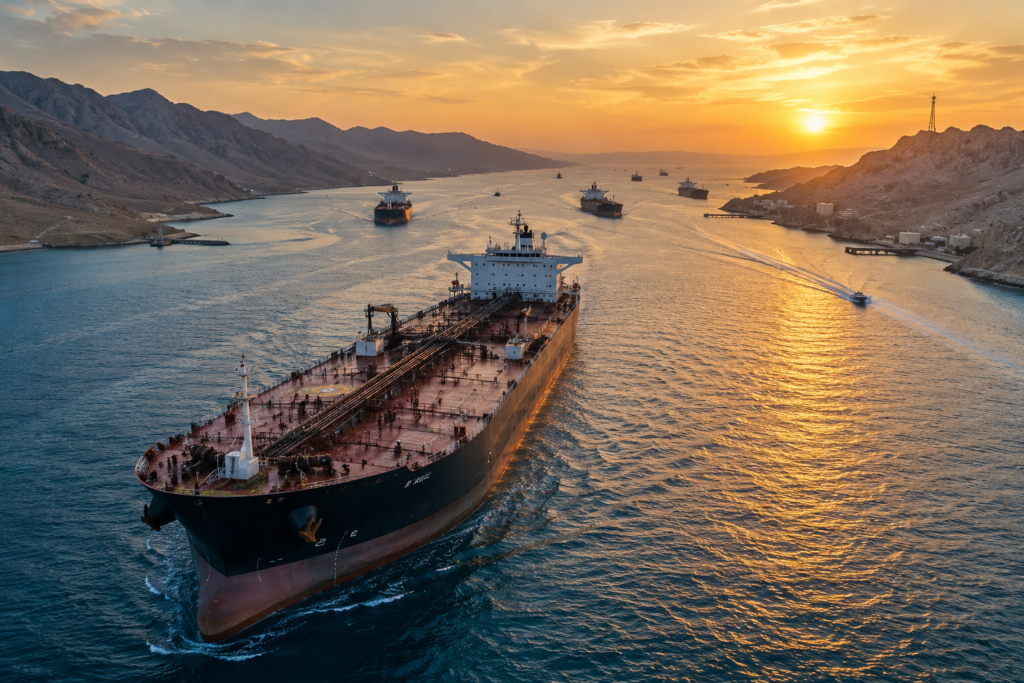
Global energy markets often react immediately when geopolitical instability threatens critical transportation routes, but some sectors benefit directly from the volatility that uncertainty creates. Recent developments surrounding the ongoing Hormuz crisis have once again demonstrated how interconnected maritime logistics and energy economics remain in the international oil trade. While oil producers, refiners, governments, and industrial buyers focus on supply security and price stability, tanker owners operating in international shipping markets are experiencing one of their most profitable periods in recent memory. The current surge in freight earnings reveals how geopolitical disruptions can dramatically reshape shipping economics almost overnight. As the shipping industry responds to elevated risk levels in one of the world’s most strategically important maritime corridors, tanker owners profiting during Hormuz crisis conditions has become one of the most significant developments affecting global oil transportation and broader energy supply chains.
The Strait of Hormuz has always carried extraordinary importance because it serves as the primary export route for a substantial portion of globally traded crude oil. Whenever tensions escalate in the region, shipping markets react quickly. Insurance premiums rise, route planning becomes more complicated, charter rates accelerate sharply, and tanker operators suddenly find themselves negotiating from a position of exceptional strength.
The Strait of Hormuz remains one of the most strategically sensitive shipping corridors in the modern global economy. Positioned between the Persian Gulf and the Gulf of Oman, this narrow maritime route serves as the gateway through which enormous quantities of crude oil and petroleum products move toward major importing nations across Asia, Europe, and other global markets.
Several major oil-producing nations depend almost entirely on this shipping corridor to move exports to international buyers. Because such a large percentage of internationally traded crude moves through this narrow passage, even relatively short disruptions immediately influence market sentiment worldwide. Commodity traders closely monitor regional developments because uncertainty surrounding tanker movement can quickly create fears regarding delayed supply, inventory shortages, and broader energy market instability.
When tensions rise, shipping companies become central players in the unfolding economic response. The physical movement of oil remains dependent on tanker fleets capable of navigating increasingly uncertain operating conditions, which naturally changes pricing dynamics across the maritime sector.
The strategic importance of Hormuz ensures that shipping disruptions never remain isolated regional concerns.
Periods of geopolitical instability frequently introduce substantial risk into maritime transportation markets, but increased risk often translates directly into higher compensation for shipping operators willing to continue operating under uncertain conditions. Tanker owners are currently experiencing this exact market dynamic as tensions surrounding Hormuz reshape freight economics.
When geopolitical tensions escalate, charterers seeking immediate vessel availability become willing to pay premium rates to secure transportation capacity. Oil companies facing delivery obligations cannot simply pause operations indefinitely. Crude exports must continue moving, even when shipping conditions become increasingly complex.
This shifts bargaining power toward tanker owners. Operators controlling available vessels suddenly gain pricing leverage because supply chain participants urgently need transportation solutions despite elevated operational uncertainty.
Higher freight rates therefore reflect more than simple demand increase. They represent compensation for accepting heightened geopolitical risk, potential security concerns, insurance complications, and operational unpredictability affecting voyage planning.
For tanker operators positioned correctly within the market, these disruptions create unusually favorable commercial conditions.
Shipping rates in the tanker market can move dramatically when geopolitical uncertainty affects major oil transportation routes. Unlike many traditional industries where pricing changes gradually, maritime freight markets respond immediately when vessel availability becomes constrained or perceived risk levels rise significantly.
During the Hormuz crisis, charter rates for crude oil tankers have increased sharply because market participants anticipate possible operational disruption affecting vessel scheduling and cargo movement. Charterers seeking guaranteed transport capacity often move aggressively to secure ships before conditions worsen further.
This immediate competition drives freight costs substantially higher. Tanker operators earning elevated day rates can experience extraordinary short-term revenue increases, particularly if vessels are available precisely when market demand spikes.
The volatility itself becomes a profit generator for shipping companies positioned within active trade corridors.
Even temporary regional uncertainty can dramatically reshape earnings potential across international maritime transport markets.
The current environment illustrates how sensitive shipping economics remain to geopolitical developments.
Shipping through politically sensitive regions introduces operational risks extending beyond ordinary fuel expenses or crew management costs. Insurance providers carefully evaluate geopolitical developments when determining coverage pricing for vessels operating near high-risk maritime zones.
As tensions surrounding Hormuz intensify, insurance premiums for vessels transiting the region typically rise substantially. War risk insurance, cargo protection costs, liability coverage, and other operational expenses increase rapidly when underwriters perceive elevated security threats.
These rising costs directly influence freight pricing. Charterers pay higher shipping rates partly because tanker operators must offset significantly increased operational expenses associated with higher-risk voyages.
However, these elevated costs often remain lower than the overall revenue increase created by constrained vessel availability and heightened transport demand.
The result is improved profit margins for operators capable of maintaining commercial activity under uncertain conditions.
Risk itself becomes a priced commodity within global shipping markets.
This dynamic currently benefits tanker owners significantly.
Modern global oil markets depend heavily on uninterrupted maritime transportation infrastructure connecting producing nations with consuming economies worldwide. Crude oil production alone holds limited economic value unless transportation networks reliably move supply toward refiners and industrial buyers.
The Hormuz crisis highlights how central tanker fleets remain within this global system. Millions of barrels produced daily throughout the Gulf region require maritime transport before reaching international markets. Shipping delays create downstream effects influencing refinery operations, fuel pricing, inventory planning, and industrial procurement decisions globally.
Oil supply chains operate according to tightly coordinated logistics schedules. Delayed vessel movement affects cargo timing, contractual obligations, refinery throughput planning, and storage infrastructure utilization.
Because these systems operate continuously, market participants often pay substantial premiums to avoid disruption during periods of uncertainty.
This urgency strengthens negotiating leverage for tanker operators controlling available transport capacity.
Maritime logistics remains one of the most important foundations supporting global energy stability.
Periods of geopolitical instability frequently change purchasing behavior among oil traders, refiners, and shipping charterers. Companies exposed to commodity market volatility often adopt hedging strategies designed to minimize operational uncertainty during unstable periods.
Charterers may begin securing vessel contracts earlier than usual to avoid potential future shortages. Some companies negotiate longer charter periods to guarantee transportation availability regardless of market conditions worsening further. Others accelerate procurement schedules to secure physical supply before additional disruption develops.
This behavior increases immediate demand for tanker capacity, further tightening vessel availability within global shipping markets. Tanker operators benefit because stronger demand allows more favorable contract negotiation and improved earnings visibility.
Shipping companies experienced in volatile markets often anticipate these behavioral shifts and position fleets strategically near active export routes likely to experience disruption-related demand spikes.
Sophisticated operators understand that market psychology can become as important as physical supply constraints.
Volatility itself creates commercial opportunity.
The current Hormuz situation demonstrates this principle clearly.
Although tanker owners currently benefit financially from rising freight rates, broader energy markets experience more complicated consequences when shipping disruptions affect critical export corridors. Higher transportation costs frequently contribute to upward pressure on crude oil pricing because logistical expenses become embedded within delivered commodity cost structures.
Import-dependent economies may face higher procurement expenses if shipping premiums remain elevated for extended periods. Refiners operating on narrow margins can experience profitability pressure when feedstock transportation costs rise unexpectedly.
Energy traders also begin factoring geopolitical uncertainty into futures pricing models, introducing temporary volatility across commodity exchanges. Governments dependent on stable energy imports may accelerate strategic reserve planning or diversify supplier relationships to reduce exposure to future disruption.
Thus, while tanker owners benefit directly from the crisis environment, broader market participants face increased uncertainty and elevated operating costs.
Shipping economics and commodity pricing remain deeply interconnected.
Events affecting maritime transport inevitably influence energy market behavior globally.
The current profitability surge experienced by tanker owners during the Hormuz crisis reinforces a broader lesson shaping future maritime logistics planning. Geopolitical instability increasingly represents one of the most important variables influencing international shipping economics, particularly within energy transportation sectors.
Shipping companies may invest more heavily in route diversification planning, geopolitical intelligence monitoring, and flexible fleet deployment strategies allowing faster response to regional disruptions. Energy companies may similarly seek greater supply chain resilience by diversifying export routes or negotiating alternative sourcing arrangements.
Governments observing current market behavior will likely place renewed emphasis on protecting critical shipping corridors supporting national energy security. Maritime insurance providers may continue refining risk pricing models to respond more dynamically during future regional crises.
The relationship between geopolitics and shipping economics will remain increasingly important as global energy trade continues depending heavily on strategically sensitive maritime routes.
The future of energy transportation may become even more influenced by geopolitical risk management.
The ongoing Hormuz crisis has once again demonstrated how geopolitical instability can dramatically reshape global shipping economics within remarkably short timeframes. While uncertainty surrounding one of the world’s most critical oil transportation corridors creates concern among governments, refiners, and commodity markets, tanker owners profiting during Hormuz crisis conditions are experiencing some of the strongest commercial opportunities seen in recent years.
Rising charter rates, elevated insurance premiums, tighter vessel availability, and increased urgency among charterers have combined to create unusually favorable conditions for shipping operators positioned within global oil transport markets.
This development highlights the extraordinary interconnectedness between maritime logistics, geopolitical risk, and global energy supply chains. Oil markets depend not simply on production capacity but on reliable transportation systems capable of moving supply across politically sensitive regions without interruption.
As global energy demand continues expanding, maritime transportation will remain central to market stability, and future geopolitical tensions will likely continue shaping shipping economics in profound ways.
The Hormuz crisis reminds the world that in modern energy markets, those controlling transportation infrastructure often profit most when uncertainty rises.
© 2026 Vastly. All rights reserved.