
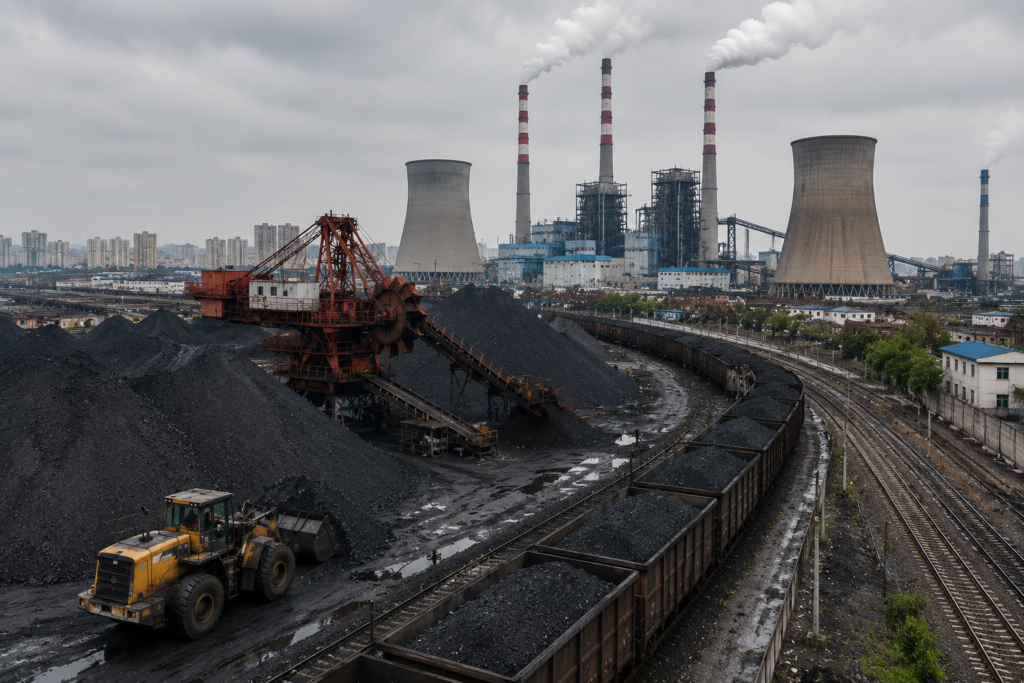
China has spent the last decade positioning itself as one of the world’s most ambitious investors in renewable energy, consistently announcing aggressive climate commitments, expanding solar manufacturing capacity, and accelerating large-scale wind energy development. Yet beneath this global image of clean energy leadership lies a far more complicated reality. Despite massive investment in renewable infrastructure and repeated commitments toward carbon reduction, China continues relying heavily on coal to sustain industrial growth, maintain grid stability, and guarantee long-term energy security. This contradiction has become one of the most important discussions shaping global energy markets today. The growing tension between China coal energy policy and the country’s green ambitions reveals a deeper truth about modern energy transitions. Moving toward cleaner energy systems is far more complex than replacing fossil fuels overnight, particularly for economies operating at enormous industrial scale.
China’s continued dependence on coal is not simply a contradiction in environmental strategy. It reflects difficult economic decisions, infrastructure realities, industrial demand pressures, and geopolitical concerns influencing how the world’s second-largest economy approaches long-term energy planning. Understanding why China continues expanding coal consumption despite renewable energy leadership provides valuable insight into the realistic pace of the global energy transition.
China possesses one of the most energy-intensive industrial economies in the world. Manufacturing, steel production, heavy construction, chemical processing, infrastructure development, transportation systems, and large-scale export production all require enormous quantities of reliable energy delivered consistently across vast geographic regions. Coal has historically formed the foundation of this energy system and continues playing a dominant role in electricity generation.
Unlike smaller economies capable of transitioning more quickly toward renewable systems, China operates industrial infrastructure requiring stable baseload electricity at extraordinary scale. Coal-fired power plants remain highly effective at delivering predictable energy output continuously, particularly during periods of peak industrial demand.
This operational reliability explains why coal consumption remains deeply integrated within China’s national energy infrastructure.
Coal remains economically practical.
It continues supporting industrial continuity.
And replacing it immediately remains extraordinarily difficult.
One of the strongest reasons behind China’s sustained coal reliance involves economic growth priorities. Chinese policymakers continue viewing industrial expansion as central to employment stability, export competitiveness, domestic infrastructure development, and long-term national economic resilience.
Rapid industrial activity requires massive energy consumption, particularly across sectors such as aluminum production, cement manufacturing, heavy engineering, and large-scale manufacturing operations supporting global supply chains. These industries demand uninterrupted electricity availability, making energy reliability a central economic concern.
Renewable systems, while expanding rapidly, cannot yet consistently meet the full scale of industrial energy demand during every operating condition. Until alternative technologies mature sufficiently, coal remains one of the most dependable solutions supporting economic continuity.
China’s leadership faces difficult tradeoffs.
Economic stability remains politically essential.
Industrial productivity continues requiring enormous energy input.
Coal therefore remains strategically important.
Although China continues relying on fossil fuels, its renewable energy expansion remains among the most aggressive globally. The country leads global investment in solar panel manufacturing, large-scale wind generation infrastructure, hydroelectric capacity development, electric vehicle production, battery manufacturing, and advanced transmission networks supporting future decarbonization.
China has invested heavily in clean energy technologies not simply for environmental reasons but also because renewable infrastructure supports long-term industrial competitiveness, technological leadership, and reduced dependence on imported energy resources.
This makes China’s energy strategy more nuanced than many simplified climate narratives suggest.
The country is not abandoning clean energy goals.
Rather, it is simultaneously expanding renewable capacity while preserving coal as a strategic backup.
Both strategies currently operate together.
Energy transition remains incremental rather than immediate.
China’s manufacturing economy consumes electricity at levels unmatched by most nations. Factories producing electronics, automotive components, industrial machinery, chemicals, semiconductors, steel products, consumer goods, and export products operate continuously throughout enormous industrial zones.
Industrial energy use remains one of the strongest barriers preventing rapid fossil fuel phase-out. Renewable energy systems increasingly contribute substantial generation capacity, yet intermittency challenges continue limiting reliability during certain weather conditions or demand spikes.
Solar generation naturally fluctuates depending on sunlight conditions.
Wind generation remains weather dependent.
Industrial production cannot simply pause when renewable output declines unexpectedly.
Coal-fired power generation therefore continues providing dependable baseload support.
Energy demand realities often override environmental aspirations.
Industrial continuity requires consistent supply.
Economic systems depend on reliability.
China has unquestionably become a renewable energy powerhouse, yet expanding generation capacity alone does not automatically solve broader infrastructure challenges. Renewable systems require enormous grid modernization investments capable of distributing electricity efficiently across geographically diverse demand centers.
Storage technology remains another major challenge. Large-scale battery systems capable of storing renewable energy for long-duration industrial use remain expensive and technologically constrained relative to national electricity demand requirements.
Transmission infrastructure connecting renewable generation zones to industrial consumption centers requires years of construction and enormous capital expenditure.
This means renewable energy transition depends not only on building solar farms and wind installations but also redesigning the national electricity network supporting their integration.
Infrastructure transformation moves slowly.
Energy systems cannot be rebuilt instantly.
Coal remains the stabilizing bridge during transition periods.
Practical engineering limitations shape policy decisions.
National energy security remains one of the most overlooked factors influencing China energy policy. China imports significant quantities of oil and natural gas from geopolitically sensitive regions, creating long-term concerns about supply vulnerability during periods of international tension.
Coal offers one major advantage often ignored in climate discussions.
China possesses substantial domestic coal reserves.
This provides strategic energy independence unavailable through imported petroleum or liquefied natural gas supply chains.
Policymakers therefore increasingly treat coal not only as an energy source but also as a strategic national security asset protecting industrial continuity during uncertain geopolitical conditions.
Reducing foreign dependency remains a major objective.
Domestic energy security shapes infrastructure decisions.
Coal continues supporting strategic autonomy.
Geopolitical considerations influence climate timelines significantly.
Energy infrastructure decisions operate across decades rather than years. Coal-fired power plants require enormous upfront investment, and once operational they typically remain active for extended periods to justify capital expenditure.
China has continued approving new coal generation projects partly because immediate energy demand continues growing faster than renewable systems can fully replace conventional power generation.
This creates structural inertia within the energy system.
New infrastructure investments naturally extend fossil fuel dependency timelines.
Shutting facilities prematurely would create economic inefficiency and potentially destabilize electricity supply systems supporting industrial production.
The transition toward lower-carbon energy therefore unfolds gradually.
Infrastructure replacement cycles take decades.
Large economies cannot pivot instantly.
Capital investment shapes energy strategy long term.
Although environmental advocates often promote accelerated fossil fuel reduction, immediate coal phase-out would carry significant economic consequences for China. Higher electricity costs, industrial disruption, reduced manufacturing competitiveness, employment instability, infrastructure shortages, and supply chain disruptions could emerge if policymakers move too aggressively.
China remains central to global manufacturing networks supplying electronics, machinery, consumer products, construction materials, and industrial components used worldwide.
Disrupting domestic industrial energy systems could trigger international supply chain instability affecting global inflation and manufacturing economics far beyond China itself.
Economic stability therefore remains a major constraint limiting faster decarbonization efforts.
Energy transitions involve tradeoffs.
Climate objectives must balance economic continuity.
Industrial competitiveness remains strategically essential.
Policy decisions increasingly reflect these competing priorities.
China’s continued coal dependence carries major implications for global emissions reduction efforts. As one of the world’s largest carbon emitters, China’s energy choices heavily influence international climate projections and broader emissions trajectories over coming decades.
At the same time, China demonstrates an important lesson often overlooked in global energy debates. Large industrial economies cannot abandon fossil fuels immediately without risking economic disruption, infrastructure instability, and industrial supply chain consequences.
The global energy transition is likely to be slower and more complex than many early projections assumed.
Countries may continue expanding renewable infrastructure aggressively while simultaneously preserving conventional energy systems longer than climate models initially anticipated.
Pragmatism increasingly shapes energy policy.
Transition requires balance.
Ambition alone cannot replace infrastructure reality.
Energy transformation remains a multi-decade process.
China’s continued reliance on coal despite aggressive green energy commitments highlights one of the defining contradictions shaping modern global energy policy. While the country leads global renewable investment and continues pursuing ambitious long-term carbon reduction strategies, coal remains deeply embedded within industrial production systems, electricity generation infrastructure, and national energy security planning.
The tension between environmental commitments and operational necessity demonstrates that large-scale energy transitions rarely follow simple political narratives. China coal energy policy increasingly reflects pragmatic decision-making balancing economic growth, industrial reliability, infrastructure constraints, geopolitical risk, and long-term sustainability objectives simultaneously.
For global energy markets, China’s approach sends a clear message.
Renewable energy transition is accelerating worldwide.
But fossil fuels remain essential far longer than many expected.
The road toward cleaner energy systems will be gradual, complex, and deeply influenced by economic reality.
China’s energy paradox may ultimately define the pace of global transition itself.
© 2026 Mana Global. All rights reserved.