
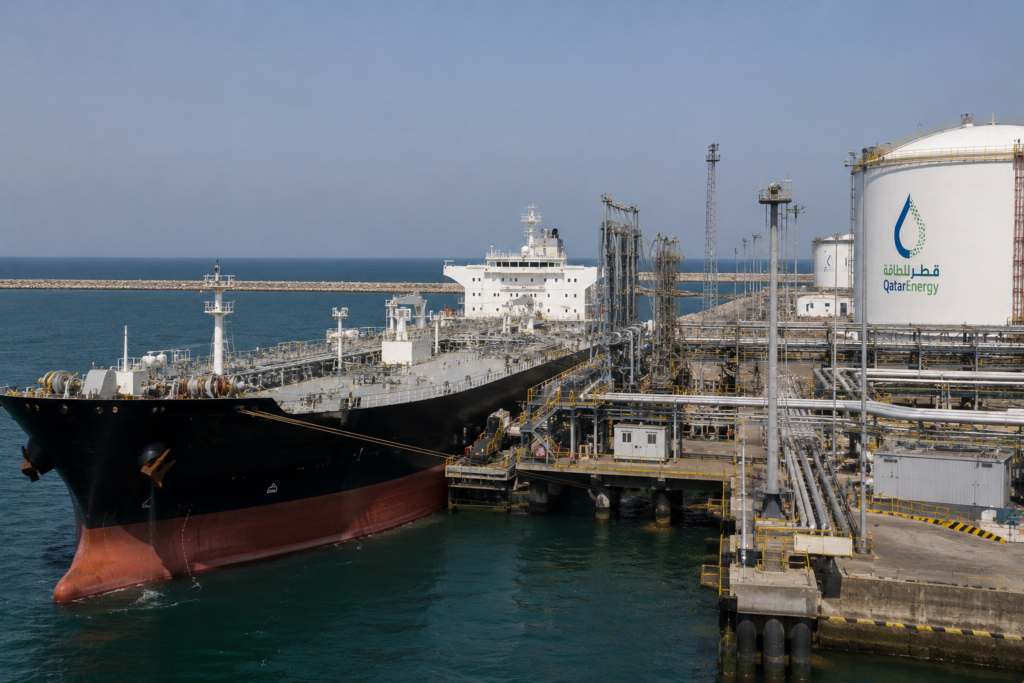
The announcement that Qatar has begun offering its first crude oil loadings to international buyers since the war began has immediately attracted global attention across commodity markets, geopolitical circles, and energy trading networks. Any interruption involving Middle Eastern oil exports carries worldwide significance because the region remains one of the most strategically important centers for global petroleum production. Qatar’s decision to resume crude availability signals more than a return to commercial activity. It represents a possible shift toward greater stability in regional energy flows at a time when international supply chains remain highly sensitive to geopolitical disruption.
Global oil markets are deeply interconnected, meaning even temporary interruptions in supply from one exporting nation can trigger immediate volatility in pricing structures, freight rates, insurance premiums, and buyer procurement strategies. Qatar’s move to reopen crude loading opportunities therefore arrives as a meaningful indicator that market participants may begin reassessing supply risk in the region. Investors, refiners, and policymakers now view this development as a critical signal regarding whether recent instability in Middle Eastern energy corridors may gradually ease.
Although Qatar is internationally recognized for its dominance in liquefied natural gas exports, the country also holds a meaningful role in crude oil production within the Gulf region. Over decades, Qatar has built a highly sophisticated energy infrastructure capable of efficiently extracting, refining, storing, and exporting petroleum products to international buyers across Asia, Europe, and other energy-dependent markets.
Its geographic location provides strategic advantages due to immediate access to major shipping routes connected through the Persian Gulf and the Strait of Hormuz, one of the world’s most important maritime corridors for oil transportation. Because substantial portions of global petroleum exports pass through this narrow route, any disruption affecting nearby producers creates widespread concern regarding crude oil availability and future supply reliability.
Qatar’s energy sector has historically operated as an important stabilizing force within broader Gulf export networks. The resumption of crude loadings therefore suggests that operational confidence within its export infrastructure is gradually returning after a period of heightened geopolitical uncertainty.
When conflict erupted in the region, global energy markets reacted almost instantly. Traders feared escalation could threaten oil production infrastructure, disrupt maritime shipping lanes, increase insurance costs for tanker operators, and reduce export availability from several major Gulf producers simultaneously. Markets responded predictably with heightened volatility as buyers rushed to assess supply risks and secure alternative procurement channels where possible.
The impact extended beyond physical oil availability. Energy security concerns intensified among importing nations heavily dependent on Middle Eastern crude, particularly major Asian economies relying on stable petroleum shipments for industrial production and transportation systems. Shipping companies began recalculating route risks while insurers adjusted premiums for vessels operating near conflict zones.
During these periods of uncertainty, energy markets frequently experience price inflation driven not necessarily by actual shortages but by perceived future supply risk. The war introduced significant uncertainty into already fragile global supply chains, forcing producers and buyers alike to reevaluate procurement strategies under increasingly unpredictable conditions.
Qatar temporarily reducing or delaying crude offerings became part of this broader market response, reflecting the heightened caution affecting regional exporters.
The decision by Qatar to resume crude loadings suggests multiple conditions may have improved enough to restore operational confidence. One likely factor involves stabilization of immediate security concerns surrounding shipping routes and export terminal operations. Energy producers typically prioritize physical infrastructure security before resuming normal commercial activity, particularly when geopolitical tensions threaten nearby transportation corridors.
Diplomatic developments may also have played a role. Regional de-escalation efforts often help restore confidence among buyers and shipping operators hesitant to engage during active conflict conditions. Even modest improvements in political stability can significantly influence decisions surrounding export scheduling and international cargo commitments.
Another important factor involves economic necessity. Oil-exporting countries depend heavily on hydrocarbon revenue to support fiscal planning and long-term economic development. Prolonged interruptions create revenue pressure, encouraging governments and producers to resume exports as soon as operational conditions permit.
Qatar’s return to offering crude loadings therefore likely reflects a combination of improved security assessments, reduced immediate conflict risks, and the strategic economic importance of restoring export continuity.
Qatar crude oil exports returning to international markets immediately improve short-term supply confidence. Although Qatar alone does not dominate crude production volumes compared with larger Gulf exporters, every additional available cargo contributes to stabilizing overall supply expectations.
Oil markets frequently react positively when supply uncertainty decreases. The mere presence of additional export capacity helps reassure buyers concerned about shortages, reducing panic-driven purchasing behavior that often contributes to excessive price volatility.
This development may also relieve pressure on alternative suppliers forced to compensate for reduced Gulf exports during the conflict period. Producers such as Saudi Arabia, United Arab Emirates, and Kuwait have faced increased market attention whenever regional instability threatens coordinated supply reliability.
Restored export activity from Qatar signals that broader regional supply systems may be more resilient than initially feared, improving confidence across international commodity markets.
Qatar’s resumed crude loadings also carry importance within broader conversations surrounding OPEC and regional production strategy. Although individual exporters manage independent operational decisions, coordinated supply behavior across major producers frequently influences overall market balance.
Periods of conflict create additional pressure on producing nations to maintain market stability wherever possible. Unexpected supply disruptions can undermine carefully managed production strategies designed to support pricing stability across international benchmarks such as Brent crude.
Regional coordination becomes particularly important when markets experience simultaneous geopolitical uncertainty and fluctuating demand conditions. Qatar returning to active export participation suggests Gulf producers remain focused on preventing prolonged supply instability that could damage both revenue expectations and long-term buyer confidence.
Energy analysts will likely examine whether this resumption represents isolated recovery or signals broader normalization across regional export systems affected by recent conflict.
Modern global energy markets increasingly prioritize resilience rather than simple production capacity. Events affecting Middle Eastern supply routes remind governments and corporations alike that energy security depends heavily on stable geopolitical conditions surrounding major production hubs.
Qatar’s resumed crude offerings highlight how quickly geopolitical events can influence supply chain reliability. Even short-term disruptions affect shipping schedules, insurance pricing, refinery planning, inventory management, and procurement strategy for energy-consuming nations worldwide.
Import-dependent economies continue learning that diversification of supply relationships remains essential for long-term energy security planning. The conflict and subsequent temporary export uncertainty reinforce the importance of maintaining flexible procurement systems capable of responding rapidly when geopolitical conditions change unexpectedly.
At the same time, producing nations increasingly recognize that operational resilience has become equally important as production volume itself. Maintaining reliable export capacity during uncertain geopolitical periods strengthens buyer trust and preserves long-term market relationships critical for future competitiveness.
The decision allowing Qatar crude oil exports to resume offers cautious optimism regarding short-term stability within global energy markets. While broader geopolitical tensions may remain unresolved, this development demonstrates that regional export infrastructure retains significant resilience even under uncertain conditions.
Oil traders, policymakers, and investors increasingly understand that geopolitical disruptions no longer affect isolated markets. Supply interruptions in one region immediately create pricing consequences worldwide due to tightly interconnected global energy systems.
Looking ahead, Qatar’s return may help moderate immediate supply concerns while encouraging broader confidence across crude procurement markets. However, continued geopolitical uncertainty means volatility risks remain elevated. Future market behavior will depend heavily on whether regional stability continues improving or whether renewed tensions create additional disruptions.