
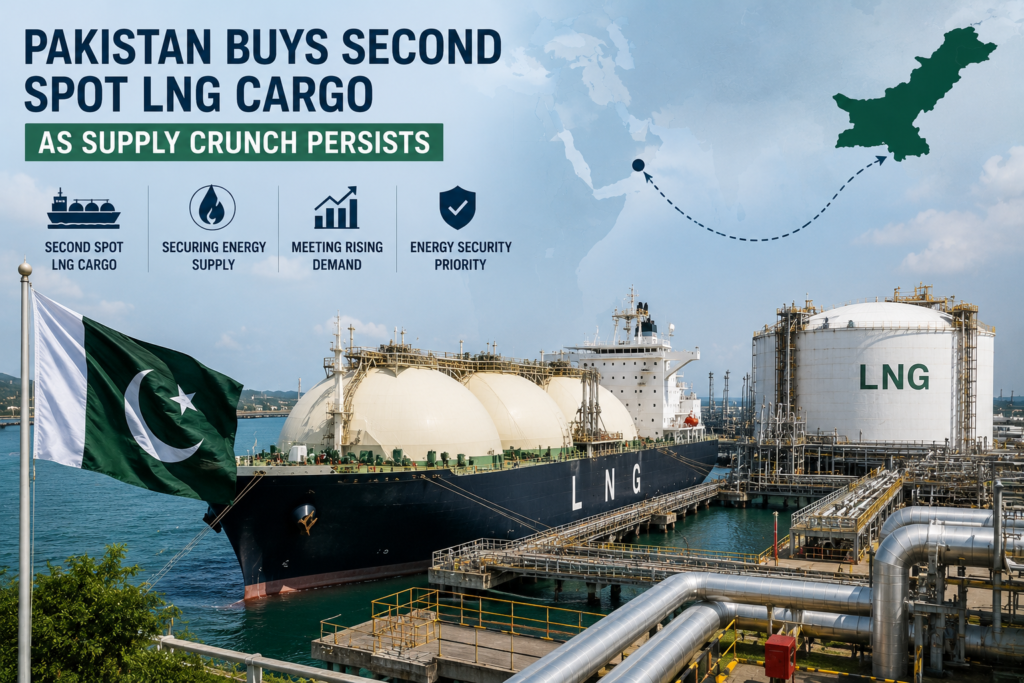
The arrival of an LNG carrier Pakistan receives today represents far more than the docking of another commercial vessel. It symbolizes the country’s continuing effort to maintain electricity generation, stabilize industrial production, and support millions of households facing increasing energy demand. Every shipment of liquefied natural gas entering a modern LNG import terminal serves as an essential component of Pakistan’s broader strategy to overcome fuel shortages while reducing pressure on existing domestic energy resources. As international gas markets remain volatile and competition for available cargoes intensifies, the efficient unloading of LNG has become a defining element of Pakistan’s energy resilience.
Pakistan’s energy sector has undergone substantial transformation during the past decade. Growing urbanization, industrial expansion, and rising electricity consumption have significantly increased demand for dependable fuel sources. Domestic natural gas production has struggled to keep pace with this rapid growth, creating an expanding supply gap that imported liquefied natural gas now helps fill. The visual image of an LNG carrier transferring its cargo into a modern terminal captures one of the country’s most important energy lifelines, connecting international suppliers with power plants, manufacturing facilities, commercial businesses, and residential consumers throughout Pakistan.
Recent market developments have reinforced this dependence. Pakistan’s decision to secure an additional spot LNG cargo reflects continuing efforts to address supply shortages during periods of heightened electricity demand. Spot purchases often become necessary when long-term contracted volumes prove insufficient or when seasonal consumption unexpectedly rises. Although purchasing LNG on the spot market frequently exposes buyers to higher prices, these cargoes can provide critical flexibility during periods when uninterrupted fuel availability becomes more valuable than cost certainty.
Pakistan’s transition toward greater LNG imports has been driven by several interconnected economic and operational realities. Domestic natural gas reserves continue supplying an important portion of national demand, yet production growth has remained relatively limited compared with expanding consumption. Industrial development, population growth, and increased electrification have steadily widened the imbalance between supply and demand.
In response, liquefied natural gas has emerged as one of the country’s most practical solutions for bridging this gap. LNG enables Pakistan to access natural gas produced in exporting nations across multiple continents, allowing domestic buyers to diversify supply sources rather than relying exclusively on local production. Modern LNG infrastructure converts imported liquid gas back into gaseous form before distributing it through national pipeline networks supporting electricity generation, industrial manufacturing, fertilizer production, commercial operations, and residential consumption.
The increasing reliance on imported LNG also reflects broader changes occurring throughout global energy markets. Many developing economies have embraced natural gas as a transitional fuel capable of supporting economic growth while producing fewer emissions than coal or heavy fuel oil. Pakistan has similarly expanded gas-fired electricity generation because natural gas offers relatively high efficiency, operational flexibility, and lower local air pollution compared with several traditional alternatives.
However, increased dependence on imported fuel introduces new challenges. International LNG pricing fluctuates according to seasonal demand, geopolitical developments, shipping availability, weather events, and production capacity across major exporting countries. These variables require Pakistan’s energy planners to balance affordability with supply security, making procurement decisions increasingly complex.
The efficiency of a modern LNG import terminal extends far beyond simple cargo unloading. These sophisticated facilities represent critical infrastructure connecting global energy markets with domestic consumers. Every operational stage must be carefully coordinated, beginning with vessel scheduling and continuing through unloading, storage, regasification, quality monitoring, safety management, and pipeline distribution.
When an LNG carrier approaches port, specialized marine personnel coordinate safe navigation toward dedicated berths designed specifically for cryogenic cargo handling. Once securely moored, insulated transfer systems begin moving liquefied natural gas from onboard storage tanks into large land-based containment facilities. Throughout this process, advanced monitoring equipment continuously measures temperature, pressure, flow rates, and product integrity to ensure safe operations.
Following storage, regasification systems gradually warm the LNG until it returns to gaseous form. The resulting natural gas enters transmission infrastructure connecting power stations, industrial facilities, and regional distribution networks across Pakistan. Every stage of this operation requires highly trained engineers, sophisticated automation technology, and strict adherence to international safety standards.
Reliable terminal performance has become increasingly important because delays in unloading operations can create cascading effects throughout the national energy system. Efficient terminal management enables cargoes to move rapidly from international shipping routes into domestic consumption channels, reducing bottlenecks and improving overall supply reliability.
Pakistan’s continued investment in energy infrastructure Pakistan demonstrates recognition that import capacity alone cannot solve supply challenges unless supported by efficient logistics systems capable of delivering imported fuel where it is needed most.
One of the defining characteristics of Pakistan’s current energy landscape is the persistence of Pakistan’s LNG supply shortage despite expanding import infrastructure. Demand often rises faster than contracted supply volumes, particularly during periods of elevated electricity consumption driven by seasonal weather conditions or industrial activity.
This imbalance explains why Pakistan periodically returns to international spot markets seeking additional cargoes. Spot purchases allow buyers to respond quickly to changing consumption forecasts without waiting for future long-term contract deliveries. However, purchasing LNG under these conditions frequently exposes importers to market volatility because spot prices respond immediately to shifts in global supply and demand.
International LNG markets have experienced significant fluctuations during recent years as geopolitical tensions, weather disruptions, production outages, shipping constraints, and changing economic conditions altered purchasing behavior among major importing nations. Countries across Asia increasingly compete for available cargoes during peak demand periods, making procurement decisions both financially and strategically important.
Pakistan’s willingness to purchase additional spot cargoes demonstrates that maintaining continuous fuel availability often outweighs concerns regarding short-term price increases. For electricity providers, industrial manufacturers, and government planners, preventing widespread power shortages remains a national priority.
Beyond economics, reliable LNG procurement also supports broader social stability. Interruptions to electricity generation can reduce industrial productivity, limit commercial activity, affect healthcare facilities, disrupt educational institutions, and create significant hardship for residential consumers during periods of extreme weather.
Pakistan’s LNG purchasing decisions increasingly reflect developments occurring across international commodity markets. Major exporters including the United States, Qatar, and Australia continue expanding production capacity, yet global demand has also increased substantially. Growing consumption throughout Asia has intensified competition for available cargoes, particularly during periods when seasonal demand peaks simultaneously across multiple importing countries.
Shipping availability further influences procurement strategies. LNG carriers represent highly specialized vessels requiring careful scheduling and substantial capital investment. Freight costs, vessel availability, canal transit conditions, insurance premiums, and geopolitical developments all contribute to the final delivered cost of imported natural gas.
For Pakistan, these international dynamics reinforce the importance of maintaining diversified procurement strategies combining long-term supply agreements with selective spot purchases. This balanced approach improves operational flexibility while reducing exposure to sudden market disruptions.