
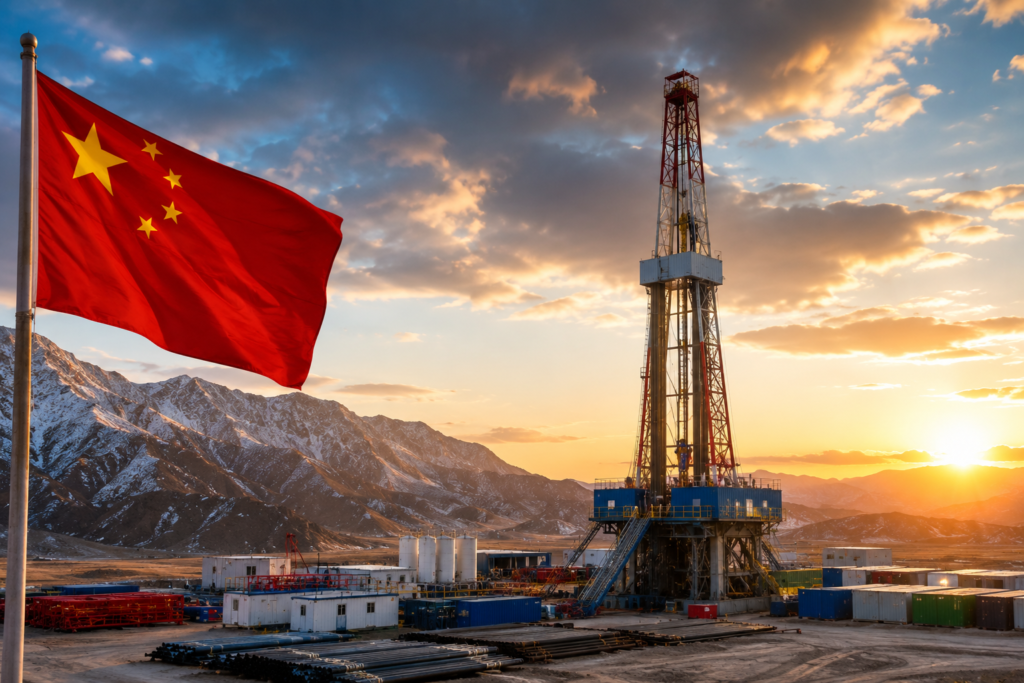
Global energy competition is entering a new phase, and nations increasingly recognize that economic stability and geopolitical strength are closely tied to energy independence. In this shifting landscape, China has begun making aggressive moves to strengthen domestic resource production and reduce vulnerability to foreign supply disruptions. One of the most significant developments in this strategy is Beijing’s growing investment in ultra-deep shale gas extraction. As the world’s second-largest economy continues balancing industrial expansion, rising domestic demand, and geopolitical uncertainty, China shale gas energy security has become a central pillar of long-term national planning. The country’s decision to pursue difficult and technologically demanding ultra-deep shale gas reserves signals a broader strategy aimed at securing reliable domestic energy while reducing dependence on volatile global supply chains.
China’s energy transition often attracts attention because of its investments in renewable technologies such as solar, electric vehicles, and battery manufacturing. However, beneath this clean energy narrative lies another strategic priority that receives less attention but may prove equally important. Natural gas remains a critical bridge fuel supporting industrial activity, electricity generation, and economic growth. Developing large-scale domestic shale gas production allows China to pursue environmental improvements while strengthening strategic energy resilience. This approach reveals how energy security continues to shape modern geopolitical strategy as much as environmental policy.
China’s economic rise over the past several decades has created enormous energy demand. Industrial production, infrastructure development, expanding urban populations, manufacturing growth, and transportation networks require vast amounts of energy every day. Although China remains one of the world’s largest coal producers, growing environmental concerns and the need for cleaner-burning energy sources have increased demand for natural gas as part of the country’s broader energy strategy.
The challenge is that China remains heavily dependent on imported oil and liquefied natural gas supplies to meet domestic consumption requirements. This dependence creates vulnerability. International conflicts, shipping disruptions, diplomatic tensions, sanctions, and price volatility can all directly impact China’s economic stability. Beijing has long recognized that overreliance on external suppliers introduces strategic risk, particularly as geopolitical tensions continue rising across major global trade routes.
This vulnerability explains why China energy independence has become a major national objective. The government increasingly prioritizes domestic energy production capacity capable of reducing reliance on international markets. Ultra-deep shale gas development fits directly into this larger strategic framework by unlocking substantial domestic natural gas reserves previously considered too difficult or expensive to access.
Shale gas extraction itself is not new, but ultra-deep shale gas represents a far more complex challenge. Traditional shale production often targets reserves located several thousand meters underground. Ultra-deep shale formations can extend much deeper, frequently reaching geological structures that require more sophisticated drilling technology, advanced pressure management systems, and specialized extraction expertise.
China possesses significant shale gas resources, but many of its largest deposits exist within geologically challenging formations located deeper underground than major shale basins in countries like the United States. Unlocking these reserves requires substantial technological investment and years of engineering development.
The strategic importance of ultra-deep shale gas lies in scale. If successfully developed, these reserves could provide China with decades of additional domestic natural gas production capacity. This would significantly strengthen long-term China shale gas energy security while reducing dependence on imported liquefied natural gas shipments vulnerable to geopolitical disruption.
The decision to invest heavily in technically difficult extraction projects demonstrates that China views domestic gas production not simply as an economic opportunity but as a national security priority.
Developing ultra-deep shale gas reserves requires advanced extraction technology capable of operating under extreme geological conditions. High-pressure drilling environments, complex rock formations, elevated underground temperatures, and significant engineering challenges make these projects far more complicated than conventional drilling operations.
China has spent years investing in domestic energy technology capabilities designed to reduce dependence on foreign engineering expertise. Advanced horizontal drilling systems, hydraulic fracturing techniques, geological imaging technologies, pressure management systems, and precision well development all play critical roles in making ultra-deep shale gas production commercially viable.
This technological push serves multiple strategic purposes. Beyond immediate energy production goals, developing advanced extraction capabilities strengthens China’s broader industrial competitiveness. Domestic innovation in drilling technology reduces reliance on foreign service providers while supporting the growth of domestic engineering expertise.
Technology development also carries geopolitical significance because nations controlling advanced extraction capabilities maintain greater independence over strategic resource development. China’s investment in these technologies demonstrates a long-term commitment to building a fully self-sufficient energy production ecosystem.
Energy security decisions are rarely driven by geopolitics alone. Economic considerations remain equally important. China imports enormous volumes of energy annually, exposing the economy to international commodity price fluctuations and transportation-related supply risks. Global natural gas prices have experienced significant volatility in recent years, particularly following major geopolitical disruptions affecting international energy markets.
Domestic shale gas production offers an opportunity to stabilize long-term energy costs by reducing exposure to unpredictable external pricing dynamics. Although ultra-deep shale extraction requires high upfront investment, long-term production can provide more stable domestic supply than reliance on imported energy commodities.
Stable energy pricing supports broader economic planning. Manufacturing industries, transportation operators, industrial producers, and infrastructure developers all benefit from predictable energy costs. Reducing import dependence also strengthens China’s trade balance by lowering the need for large-scale foreign energy purchases.
From an economic perspective, ultra-deep shale gas development represents both a supply security investment and a strategy for improving long-term cost stability within one of the world’s largest industrial economies.
Modern geopolitical competition increasingly revolves around energy access and supply chain security. Countries capable of controlling domestic energy production enjoy greater strategic flexibility during periods of international tension. Energy dependence often limits diplomatic options because supply disruptions can quickly create domestic economic instability.
China’s broader geopolitical energy strategy increasingly reflects this reality. The country has invested heavily in overseas energy infrastructure, pipeline partnerships, strategic reserves, and international supply agreements. Yet external partnerships cannot fully eliminate vulnerability created by foreign dependence.
By expanding shale gas production domestically, China strengthens internal resilience against external geopolitical pressure. Reduced import dependence makes the economy less sensitive to international disputes affecting shipping routes, sanctions regimes, or diplomatic conflicts.
This strategy also carries broader global implications. If China successfully expands domestic natural gas production significantly, global liquefied natural gas markets could shift. Reduced Chinese import demand may alter pricing structures and reshape international energy trade patterns.
China shale gas energy security therefore affects not only domestic policy but potentially global energy market dynamics as well.
China’s commitment to shale gas development may appear contradictory given its aggressive renewable energy investments. In reality, natural gas plays an important transitional role within modern energy systems. Compared with coal, natural gas produces lower carbon emissions and generates fewer harmful air pollutants during combustion.
China continues reducing coal dependence gradually as part of broader environmental objectives. However, renewable infrastructure expansion alone cannot immediately replace existing industrial energy demand. Natural gas provides a bridge fuel supporting lower-emission energy production while renewable technologies continue expanding.
This balance explains why shale gas production remains strategically important even as China invests heavily in solar, wind, battery storage, and electric transportation systems. Cleaner-burning domestic gas supports both energy security and environmental objectives simultaneously.
The strategy reflects pragmatic policymaking. Rather than pursuing immediate fossil fuel elimination, China focuses on improving energy efficiency while gradually shifting toward cleaner long-term alternatives.
Ultra-deep shale gas therefore fits within both economic planning and environmental transition strategy.
Despite strong strategic logic, China’s shale gas ambitions face substantial challenges. Ultra-deep drilling projects require significant capital investment and involve considerable technical risk. Geological complexity may reduce production efficiency or increase extraction costs beyond initial projections.
Water usage associated with hydraulic fracturing remains another concern, particularly in regions where water scarcity already presents environmental challenges. Infrastructure development, pipeline construction, transportation networks, and production scaling all require sustained investment over many years.
Competition with global energy prices also influences project economics. If imported gas prices remain relatively low, domestic shale development may face profitability pressure despite strategic benefits.
China must therefore balance long-term strategic objectives with immediate economic realities. Success will depend on continued technological advancement and efficient project execution.
Nevertheless, Beijing appears willing to accept these challenges because long-term energy security benefits outweigh short-term operational complexity.
China’s ultra-deep shale gas expansion represents more than a domestic energy project. It signals a broader shift toward national energy resilience in an increasingly unstable geopolitical environment. Countries worldwide increasingly recognize that secure domestic production capacity provides economic and strategic advantages impossible to replicate entirely through international trade partnerships.
If China successfully unlocks large-scale ultra-deep shale reserves, the impact could extend far beyond national borders. Reduced import demand may influence global natural gas pricing, shift international trade flows, and alter competitive dynamics among major energy exporters.
The project may also accelerate technological competition as other nations invest in advanced extraction capabilities to improve domestic production resilience. Energy independence remains one of the defining strategic priorities shaping modern international relations.
China’s shale gas initiative demonstrates how future geopolitical competition will increasingly center on technological control over domestic resource development.
China’s aggressive push into ultra-deep shale gas development reflects a broader reality shaping the modern energy landscape. Economic growth, geopolitical stability, and national security increasingly depend on reliable access to domestic energy resources. By investing heavily in technologically challenging shale gas production, Beijing is working to reduce foreign dependence while strengthening long-term strategic resilience.
China shale gas energy security has emerged as a critical national priority because imported energy dependence creates vulnerability within an increasingly unpredictable global environment. Ultra-deep shale gas offers a pathway toward greater China energy independence, more stable long-term energy pricing, and stronger protection against geopolitical supply disruptions.
Although technical challenges remain significant, the broader message is clear. China is betting that domestic resource development will become one of the most important pillars supporting future economic security. If successful, this strategy may not only transform China’s internal energy system but reshape global energy markets for decades to come.
© 2026 Vastly. All rights reserved.