
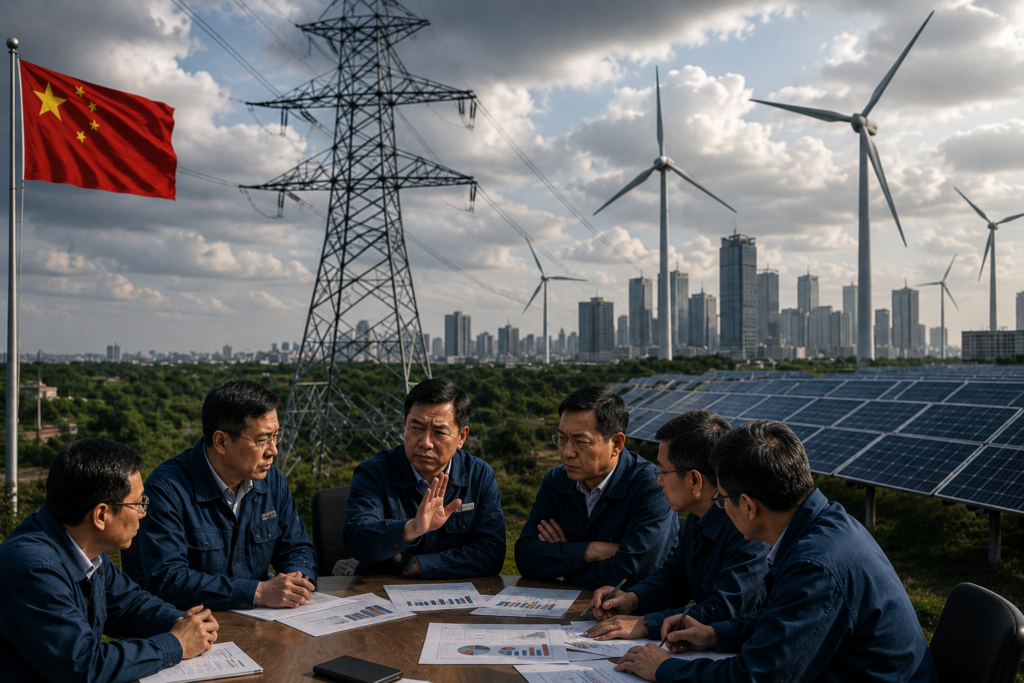
Artificial intelligence has quickly evolved from a specialized technology sector into one of the most power-intensive industries shaping the future global economy. From advanced machine learning systems to hyperscale data centers processing billions of computations every second, the infrastructure required to sustain AI development demands enormous amounts of electricity. Governments worldwide are now facing a difficult question that extends far beyond software development and semiconductor manufacturing: how can nations generate enough electricity to support expanding AI infrastructure while simultaneously meeting aggressive renewable energy targets? This question has become particularly important in China, where ambitious plans to expand renewable energy generation are now facing resistance from domestic grid operators responsible for maintaining electricity reliability. The growing debate surrounding Chinese grid operators resist renewable energy for AI initiatives reveals a deeper conflict between climate ambitions, infrastructure limitations, and the rapidly expanding energy demands created by the artificial intelligence revolution.
China’s situation illustrates a challenge increasingly confronting every major economy pursuing technological leadership. AI systems require stable, uninterrupted electricity flows, but integrating renewable energy sources into existing grid infrastructure presents technical and economic complications that cannot be solved simply through policy announcements. As demand accelerates, practical operational realities are beginning to collide with long-term sustainability objectives.
Modern artificial intelligence infrastructure operates on extraordinary computing power, and computing power requires massive electricity consumption. Training advanced AI models requires thousands of specialized processors running continuously for extended periods, often within enormous data centers operating around the clock. These facilities consume far more electricity than conventional enterprise computing systems because AI workloads involve highly complex calculations repeated continuously during machine learning training cycles.
As AI adoption expands across industries ranging from finance and healthcare to manufacturing and defense, demand for data center infrastructure continues accelerating. Each new generation of artificial intelligence systems requires larger computational capacity, which directly translates into rising electricity consumption at national scale.
China remains one of the world’s most aggressive investors in artificial intelligence development. Government-backed technology initiatives, large-scale cloud infrastructure investment, semiconductor development programs, and rapid digital transformation strategies have dramatically increased future electricity demand projections.
This surge in AI power consumption forces policymakers to confront a fundamental infrastructure challenge. Advanced computing systems cannot operate effectively without stable, continuous access to electricity at massive scale.
The AI revolution is becoming an energy infrastructure challenge as much as a software development race.
China operates one of the world’s largest electricity generation systems, supporting enormous industrial production capacity, large urban populations, transportation networks, manufacturing facilities, and expanding digital infrastructure. Historically, the country has relied heavily on coal generation to maintain reliable base-load electricity supply capable of supporting continuous industrial demand.
At the same time, China has aggressively expanded renewable energy deployment over recent years. Massive investment in solar farms, wind generation projects, hydroelectric facilities, and transmission infrastructure has positioned the country as one of the world’s largest renewable energy investors.
Despite this rapid growth, integrating renewable energy into a system designed historically around traditional power generation creates operational complexity. Electricity grids require continuous balance between supply and demand. Renewable sources like solar and wind introduce intermittency challenges because generation depends heavily on weather conditions rather than stable output patterns.
As artificial intelligence infrastructure increases demand for uninterrupted electricity, maintaining grid reliability becomes increasingly complicated.
This places grid operators under significant operational pressure.
Renewable energy expansion often appears straightforward at policy level, but electricity grid management involves highly complex technical balancing requirements invisible to most consumers. Solar and wind generation fluctuate naturally throughout the day, creating variable supply patterns that do not always align with real-time electricity demand.
Artificial intelligence data centers represent the opposite demand profile. They require highly stable, predictable electricity availability with minimal interruption risk. Even short-term voltage instability or supply inconsistency can affect data center operations, processing performance, and hardware reliability.
Grid operators responsible for maintaining system stability therefore prioritize predictability above political objectives. Integrating higher percentages of intermittent renewable energy can complicate frequency management, reserve planning, load balancing, and emergency response capabilities.
China’s grid operators understand that rapidly increasing renewable penetration without sufficient storage capacity or backup generation may create operational vulnerability precisely as AI-related electricity demand accelerates.
This technical reality helps explain why renewable-focused expansion plans are encountering institutional resistance.
The issue extends far beyond environmental policy debates.
The resistance emerging among Chinese grid operators appears rooted primarily in operational responsibility rather than opposition to renewable energy itself. Operators managing national electricity infrastructure are tasked with maintaining continuous reliability under increasingly complex demand conditions.
Artificial intelligence infrastructure requires near-perfect uptime. Unlike ordinary residential electricity demand, large-scale computing facilities cannot tolerate unpredictable interruptions without significant economic consequences. Grid managers therefore prioritize energy stability, dispatch reliability, and reserve generation capacity capable of responding instantly to unexpected demand fluctuations.
Rapid renewable deployment introduces management complexity because intermittent generation requires sophisticated balancing systems capable of stabilizing supply continuously. Without sufficient battery storage infrastructure or flexible backup generation systems, higher renewable penetration can create operational risk.
Grid operators may therefore resist aggressive renewable expansion plans not because they oppose sustainability goals, but because current infrastructure may not yet support stable integration at required scale.
This tension reflects a practical engineering concern rather than purely political disagreement.
Reliable electricity remains essential for national economic stability.
Modernizing electricity infrastructure capable of supporting both renewable integration and rapidly expanding AI demand requires enormous capital investment. Existing grid systems built around centralized fossil fuel generation often require significant redesign before accommodating large-scale distributed renewable generation effectively.
Transmission networks must be expanded to connect renewable generation sites located far from major population centers. Battery storage systems capable of smoothing intermittent supply require large-scale deployment. Smart grid technologies allowing more dynamic electricity management must be installed across distribution networks.
These infrastructure upgrades involve substantial financial cost extending far beyond simple renewable generation construction. Governments may support ambitious clean energy targets, but operators responsible for practical implementation face direct economic and engineering constraints.
China’s electricity sector therefore confronts a difficult balancing act between long-term sustainability investment and immediate operational reliability requirements.
Artificial intelligence infrastructure accelerates this challenge by dramatically increasing electricity demand faster than infrastructure modernization timelines may accommodate.
The economics of grid transformation remain extraordinarily complex.
Many governments worldwide have adopted ambitious climate strategies centered around expanding renewable energy while reducing dependence on traditional fossil fuel generation. China remains one of the most important participants in this global energy transition, investing heavily in renewable infrastructure and carbon reduction programs.
However, rapid AI development introduces a new variable complicating these sustainability objectives. Artificial intelligence systems require enormous electricity capacity, and electricity systems still depend heavily on traditional energy sources capable of providing stable continuous output.
This creates a growing tension between climate goals and infrastructure practicality. Renewable energy remains central to long-term decarbonization strategy, but immediate electricity demand growth from AI infrastructure may force greater reliance on traditional generation until grid modernization catches up.
Grid operators occupy the difficult middle ground between these competing priorities. They must maintain reliability while governments pursue long-term decarbonization commitments.
The resistance currently emerging reflects this broader structural conflict increasingly visible across global energy markets.
Technology growth is reshaping energy transition strategy itself.
Expanding renewable infrastructure at scale depends heavily on global industrial supply chains supporting energy equipment manufacturing. Solar panels require specialized semiconductor materials. Wind turbines depend on rare earth elements, steel production, and advanced engineering components. Battery storage systems require lithium, nickel, cobalt, and increasingly competitive mineral supply chains.
At the same time, artificial intelligence infrastructure depends on semiconductor manufacturing systems already facing global supply chain pressure. Nations simultaneously competing for advanced chips, data center hardware, renewable energy equipment, and critical minerals create unprecedented industrial demand concentration.
China’s infrastructure planners must therefore navigate overlapping supply chain constraints affecting both energy expansion and technology development simultaneously.
Grid modernization timelines may slow not because policy ambition is insufficient, but because industrial supply chains supporting transformation remain under enormous pressure.
This creates another reason operators may resist accelerated renewable deployment targets.
Infrastructure expansion depends on industrial capacity availability.
China’s internal debate surrounding renewable energy expansion and AI electricity demand reflects a challenge likely to emerge globally. Every nation aggressively investing in artificial intelligence infrastructure will eventually confront similar questions regarding electricity generation capacity, grid reliability, and sustainability strategy.
Data center expansion worldwide continues accelerating as companies build increasingly powerful AI computing infrastructure. This will significantly increase national electricity demand across major technology economies.
Governments may discover that renewable expansion alone cannot immediately satisfy growing demand without parallel investment in grid modernization, storage technology, transmission capacity, and backup generation systems.
The conflict emerging among Chinese grid operators therefore offers valuable insight into broader infrastructure challenges shaping the future of global technology development.
Artificial intelligence advancement increasingly depends not simply on software innovation but electricity availability at unprecedented scale.
Energy policy and technology strategy are becoming inseparable.
The growing conflict surrounding Chinese grid operators resist renewable energy for AI initiatives highlights one of the most important infrastructure challenges shaping the future global economy. Artificial intelligence development is accelerating rapidly, but supporting this expansion requires enormous electricity generation capacity capable of operating continuously and reliably.
China’s efforts to expand renewable energy remain ambitious, yet grid operators managing practical electricity infrastructure increasingly recognize the complexity of balancing sustainability goals with operational reality. Renewable integration introduces technical challenges precisely as AI power consumption begins surging nationwide.
This tension demonstrates that future technological leadership depends not only on software innovation, semiconductor production, or artificial intelligence development itself. It also depends heavily on energy infrastructure resilience capable of supporting extraordinary computing demand.
As governments worldwide invest aggressively in artificial intelligence infrastructure, China’s current challenges provide an early warning regarding the enormous energy demands shaping future technology competition.
The next phase of global AI development may ultimately depend as much on electricity systems as algorithm design. Energy infrastructure has quietly become one of the most important foundations supporting the future of technological progress.
© 2026 Vastly. All rights reserved.