
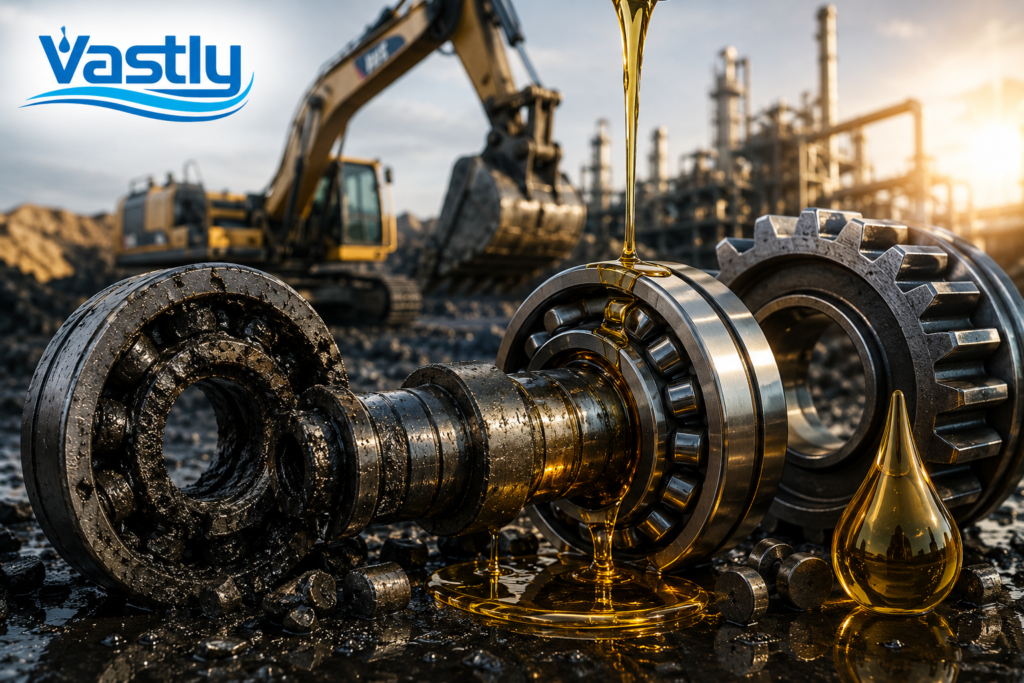
Lubrication failure in heavy machinery is one of the most common yet underestimated causes of industrial equipment breakdowns, unplanned downtime, and rising maintenance costs. In industries where machinery operates under extreme loads, continuous vibration, elevated temperatures, and harsh environmental conditions, lubrication systems serve as the first line of defense against friction and wear. When lubrication performance deteriorates, even slightly, the consequences can spread rapidly across an entire operation. Bearings begin to overheat, hydraulic systems lose efficiency, moving parts suffer accelerated wear, and machinery that once operated reliably becomes vulnerable to catastrophic failure. For facility managers and industrial operators, understanding why lubrication failure occurs is essential not only for protecting expensive assets but also for maintaining operational continuity and long-term profitability.
Lubrication does far more than simply reduce friction between moving parts. Modern industrial lubricants are engineered to manage heat transfer, prevent corrosion, reduce contamination, cushion mechanical shock, and maintain system cleanliness. Heavy machinery used in construction, mining, manufacturing, logistics, and energy production depends heavily on consistent lubrication performance to operate efficiently under demanding conditions. Without proper lubrication, metal surfaces come into direct contact with one another, creating friction that generates heat, material degradation, and premature component failure. The efficiency of machinery maintenance programs therefore depends heavily on lubrication reliability and the ability to sustain protective film strength during operation.
Among all lubrication-related issues, contamination remains one of the most damaging and widespread causes of machinery failure. Dust, water, metal particles, dirt, and chemical contaminants can infiltrate lubrication systems through damaged seals, poor storage practices, or improper maintenance procedures. Once contamination enters the lubricant, it disrupts the protective barrier between mechanical surfaces and accelerates abrasive wear. In heavy industrial environments where airborne particles and moisture exposure are common, contaminated lubricants quickly lose their effectiveness.
Water contamination is particularly destructive because it promotes oxidation, reduces lubricant viscosity, and encourages rust formation inside critical machinery components. Even microscopic contaminants can damage precision equipment such as hydraulic pumps, bearings, and gear systems. Over time, contamination-related wear reduces equipment reliability and increases the frequency of maintenance interventions. This is why preventive maintenance programs increasingly focus on lubricant cleanliness monitoring and contamination control as key operational priorities.
Viscosity is one of the most important properties of industrial lubricants because it determines the lubricant’s ability to maintain a protective film under pressure. When lubricants experience extreme temperatures or prolonged operational stress, viscosity breakdown can occur. In high-temperature operating environments, lubricants may become too thin, reducing their capacity to separate moving surfaces effectively. In colder conditions, lubricants may thicken excessively, restricting flow and increasing startup resistance.
Heavy machinery often operates in environments where thermal fluctuations are unavoidable. Equipment working under continuous load generates intense heat, which gradually degrades lubricant molecules and weakens performance characteristics. Oxidation caused by heat exposure creates sludge and varnish deposits that interfere with lubrication flow and reduce cooling efficiency. Once viscosity stability is compromised, machinery components become more vulnerable to metal-to-metal contact, overheating, and accelerated mechanical wear.
Industrial operators frequently underestimate how rapidly thermal stress can degrade lubrication systems. Without regular oil analysis and viscosity monitoring, machinery may continue operating with compromised lubrication until severe damage occurs. This highlights why lubrication best practices are essential for maintaining stable machinery performance under demanding industrial conditions.
Another major contributor to lubrication failure in heavy machinery is improper application. Using the wrong lubricant type, applying incorrect quantities, or following inconsistent maintenance intervals can significantly reduce equipment reliability. Over-lubrication is often just as harmful as under-lubrication. Excess lubricant can create pressure buildup, increase operating temperatures, and damage seals, while insufficient lubrication leaves components exposed to excessive friction and wear.
Human error continues to play a major role in lubrication-related equipment failure. In many industrial settings, lubrication procedures are treated as routine tasks rather than precision maintenance activities. Lack of technician training, poor documentation, and inconsistent maintenance schedules often lead to preventable mistakes that compromise machinery performance. As industrial systems become more advanced and equipment tolerances become tighter, the margin for lubrication errors continues to shrink.
Modern maintenance operations increasingly rely on automated lubrication systems to reduce the risks associated with manual application errors. These systems deliver precise lubricant quantities at controlled intervals, improving consistency and reducing dependency on reactive maintenance practices. Automation not only enhances equipment reliability but also improves long-term cost control by minimizing unnecessary lubricant consumption and reducing failure rates.
Heavy machinery frequently operates in harsh environmental conditions that place enormous stress on lubrication systems. Equipment exposed to desert heat, mining dust, offshore humidity, or freezing temperatures faces unique lubrication challenges that directly affect machinery performance. Environmental exposure accelerates lubricant degradation and increases the likelihood of contamination entering sensitive systems.
For example, high-temperature industrial environments can increase oxidation rates and evaporative losses, while humid conditions raise the risk of water ingress and corrosion. In dusty operations such as mining and construction, airborne particles can infiltrate lubrication systems despite protective sealing mechanisms. These environmental stressors make it essential for operators to select lubricants specifically formulated for the conditions in which machinery operates.
Climate-aware machinery maintenance strategies are becoming increasingly important as industries seek to improve operational resilience. Advanced synthetic lubricants, contamination-resistant formulations, and high-performance sealing technologies are now widely used to combat environmental lubrication challenges in demanding industrial applications.
The financial impact of lubrication failure extends far beyond repair costs. Equipment downtime disrupts production schedules, delays supply chain operations, and reduces overall productivity. In industries where heavy machinery supports continuous operations, a single lubrication-related failure can trigger substantial revenue losses and operational disruptions. Additionally, emergency repairs often require expensive replacement parts, overtime labor, and unscheduled shutdowns that strain maintenance budgets.
Prevent equipment failure strategies therefore play a critical role in industrial cost management. Organizations that invest in proactive lubrication management often achieve measurable improvements in equipment lifespan, maintenance efficiency, and energy consumption. Reliable lubrication systems also contribute to lower operational risk and improved workplace safety by reducing the likelihood of mechanical breakdowns during operation.
As industries become increasingly data-driven, lubrication management is evolving into a predictive maintenance discipline supported by analytics, condition monitoring, and real-time diagnostics. Oil analysis programs, thermal imaging, vibration monitoring, and sensor-based lubrication tracking are helping organizations detect early warning signs before failures escalate into major operational incidents.
Preventing lubrication failure requires a comprehensive and disciplined approach to machinery maintenance. Effective lubrication management begins with selecting the correct lubricant for the equipment, operating conditions, and environmental exposure levels involved. Industrial operators must also establish consistent maintenance intervals based on manufacturer recommendations, operational loads, and equipment usage patterns.
Routine oil analysis is one of the most effective preventive tools available because it provides insight into contamination levels, oxidation rates, viscosity stability, and wear particle generation. By identifying lubricant degradation early, maintenance teams can address issues before machinery performance deteriorates. Proper lubricant storage is equally important, as exposure to moisture, dirt, and temperature fluctuations during storage can compromise lubricant quality before it even enters the machinery.
Training maintenance personnel is another critical component of successful lubrication programs. Technicians must understand lubricant specifications, application procedures, contamination risks, and machinery-specific requirements. Organizations that prioritize lubrication education often experience fewer equipment failures and greater operational reliability over time.
Industrial lubrication technology continues to evolve as manufacturers and operators seek greater efficiency, sustainability, and equipment reliability. Advanced synthetic lubricants now offer improved thermal stability, oxidation resistance, and longer service life compared to conventional oils. Smart lubrication systems equipped with sensors and predictive analytics are transforming machinery maintenance into a more precise and data-driven process.
Sustainability initiatives are also influencing lubrication strategies, with industries seeking environmentally friendly lubricants that reduce emissions and improve energy efficiency. As machinery systems become increasingly automated and interconnected, lubrication management will continue to play a central role in optimizing industrial performance and reducing operational risk.
Lubrication failure in heavy machinery is not simply a maintenance issue it is a critical operational risk that affects productivity, equipment lifespan, safety, and profitability. From contamination and viscosity breakdown to environmental stress and application errors, the causes of lubrication failure are complex but manageable with the right preventive strategies. Organizations that implement strong lubrication best practices, invest in predictive maintenance technologies, and prioritize technician training are far better positioned to prevent equipment failure and maintain operational stability. In today’s competitive industrial environment, effective lubrication management is no longer optional; it is a strategic necessity that directly influences long-term business performance and machinery reliability.
© 2026 Industrial Machinery Insights. All rights reserved.