
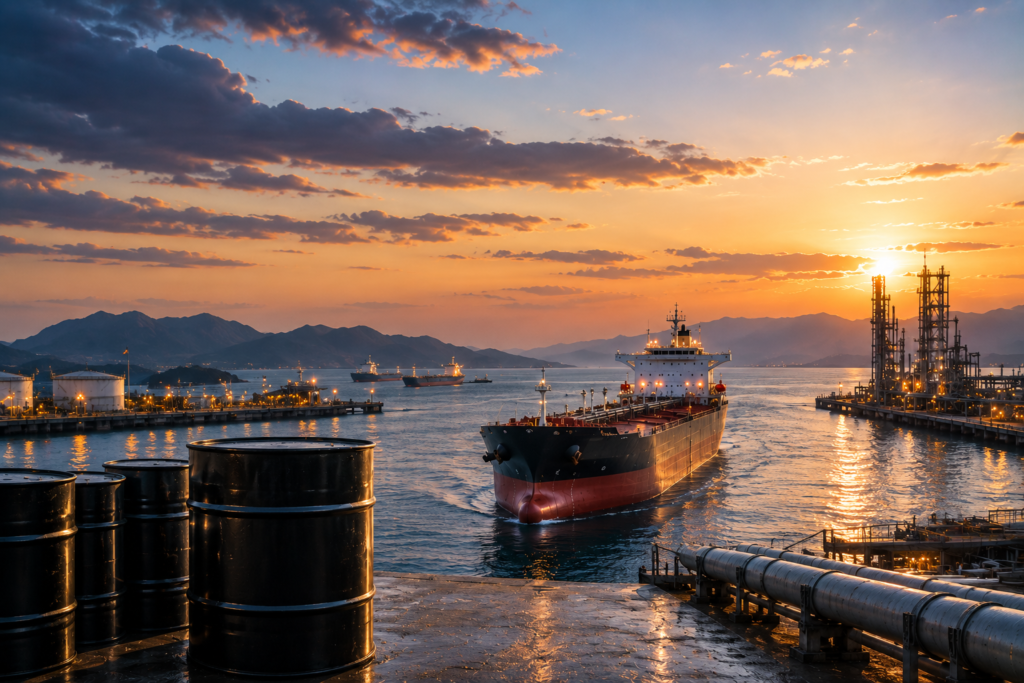
Global oil prices often move sharply when geopolitical instability threatens critical supply routes, yet recent market behavior surrounding the Strait of Hormuz reveals a surprisingly restrained reaction from traders and investors. The world’s most strategically important oil transit chokepoint has once again entered headlines amid regional tensions, but crude markets have not responded with the kind of sustained price surge many analysts would historically expect. Instead, current pricing behavior suggests investors are betting that underlying geopolitical risk has not yet reached a level severe enough to disrupt physical supply flows. This disconnect between market optimism and geopolitical uncertainty has created one of the more fascinating dynamics currently shaping international energy markets, raising serious questions about whether traders are accurately pricing future risk or simply assuming stability until proven otherwise.
The Strait of Hormuz has long occupied a unique place in global energy economics because roughly one-fifth of the world’s petroleum supply moves through this narrow maritime corridor connecting the Persian Gulf to international shipping lanes. Countries including Saudi Arabia, United Arab Emirates, Kuwait, Iraq, and Qatar rely heavily on this passage to deliver energy supplies to global markets. Historically, even limited threats to shipping security in this region have triggered aggressive price movements because energy traders understand that any prolonged disruption immediately impacts international crude availability. Yet today’s market reaction suggests something different is happening beneath the surface.
Commodity traders typically respond not only to actual disruptions but also to anticipated risk. In the case of current Hormuz tensions, the relatively muted price response indicates that investors remain unconvinced that immediate supply interruptions are likely. This confidence may stem from previous regional conflicts where alarming geopolitical developments created temporary headlines without ultimately affecting physical energy shipments.
Oil markets have become increasingly sophisticated in distinguishing between political rhetoric and actual supply disruption. Investors now frequently wait for measurable evidence before aggressively repricing risk premiums. This behavior partly explains why current oil prices continue reflecting cautious optimism rather than panic. Markets appear to believe that diplomatic pressure, military posturing, and regional tensions have not yet crossed the threshold required to materially threaten shipping operations.
Another important factor involves trader psychology shaped by recent history. Multiple geopolitical crises over the last several years initially triggered speculative oil rallies that later reversed once supply continuity remained intact. Market participants now approach geopolitical headlines with greater skepticism, reducing the likelihood of exaggerated price reactions based solely on uncertainty.
The importance of the Strait of Hormuz cannot be overstated when analyzing global oil market stability. On any given day, millions of barrels of crude oil transit through this narrow corridor, feeding refineries across Asia, Europe, and other energy-dependent economies. The concentration of supply moving through a relatively confined geographic area creates enormous strategic vulnerability.
Asian economies remain particularly exposed to potential disruption. Countries such as China, India, Japan, and South Korea depend heavily on Gulf crude exports traveling through Hormuz. A prolonged closure would force supply rerouting, increase shipping costs, tighten available inventory, and place upward pressure on fuel prices globally.
Despite these risks, the market currently appears confident that regional stakeholders understand the catastrophic economic consequences associated with disrupting such a critical trade corridor. This belief helps explain why current market pricing has remained relatively stable despite concerning geopolitical developments.
Modern crude oil supply chains operate on finely balanced logistics systems requiring extraordinary coordination between producers, shipping operators, refiners, insurers, and financial institutions. Even minor interruptions create ripple effects far beyond immediate production loss. Delayed shipments can affect refinery schedules, increase storage costs, distort pricing benchmarks, and trigger shortages in downstream fuel markets.
Because so much Gulf production moves through Hormuz, shipping security remains foundational to global supply chain reliability. Tanker operators must continuously evaluate insurance costs, route safety, military escort availability, and regional security assessments. Rising geopolitical uncertainty increases operating costs even before physical disruption occurs.
The market’s current optimism may underestimate how quickly logistical friction alone can influence global pricing. Supply disruption does not require a full shipping blockade. Even heightened insurance premiums, temporary port restrictions, or isolated security incidents can meaningfully alter transportation economics across the energy sector.
Several macroeconomic conditions help explain why investors remain relatively calm. Global oil demand growth has shown signs of moderation amid slower industrial expansion in major economies. Lower-than-expected demand growth reduces upward price pressure even when geopolitical concerns emerge.
In addition, strategic petroleum reserves maintained by major economies provide temporary protection against short-term supply interruptions. Countries including the United States maintain emergency stockpiles designed to stabilize markets during supply disruptions. This reserve capacity gives traders additional confidence that temporary interruptions would not immediately create catastrophic shortages.
Ongoing production flexibility among major producers within OPEC and non-OPEC exporting nations also contributes to current optimism. Markets believe alternative supply responses could partially offset disruptions if regional tensions unexpectedly escalate.
Yet confidence based on reserve capacity and alternative production assumes disruptions remain temporary rather than prolonged. Extended instability in the Gulf would challenge these assumptions quickly.
One recurring pattern in global commodity trading is delayed market recognition of escalating geopolitical danger. Investors frequently maintain optimism until concrete evidence forces repricing. This creates periods where asset valuations fail to reflect underlying strategic risk.
The present disconnect between oil prices and Hormuz-related uncertainty resembles previous episodes where markets underestimated geopolitical escalation. Historical examples show that once traders collectively recognize genuine disruption risk, price movements become sudden and severe.
Energy markets inherently dislike uncertainty, but modern trading behavior increasingly favors evidence-based reaction over speculative anticipation. While this reduces unnecessary volatility during temporary political disputes, it also increases vulnerability when crises accelerate faster than expected.
Current market pricing suggests traders remain comfortable assuming tensions will stabilize. If that assumption proves incorrect, price volatility could intensify far more aggressively than current conditions imply.
The broader lesson emerging from this situation extends beyond short-term oil pricing. Businesses dependent on fuel availability should recognize that commodity markets do not always immediately reflect underlying supply risk. Stable pricing does not automatically indicate secure supply conditions.
Transportation companies, industrial manufacturers, logistics providers, and procurement teams should monitor geopolitical developments independently rather than relying exclusively on market prices as indicators of future stability. Supply chain resilience increasingly depends on proactive risk management rather than reactive purchasing behavior.
The relationship between geopolitical uncertainty and energy markets has become more complex. Traditional assumptions about immediate price spikes following regional conflict no longer apply with the same consistency. Markets now process political developments through increasingly sophisticated frameworks, often delaying reaction until measurable disruption occurs.
Looking forward, the central question facing energy investors is simple. Has the market correctly assessed the risk surrounding Hormuz tensions, or is current pricing reflecting excessive confidence disconnected from geopolitical reality?
If regional tensions ease without disrupting shipments, current market optimism will appear justified. Stable oil flows will reinforce investor belief that modern markets have become more rational when pricing geopolitical headlines. However, if security conditions deteriorate unexpectedly, the current lack of risk premium could trigger rapid repricing as traders scramble to account for suddenly elevated supply vulnerability.
The world remains deeply dependent on uninterrupted Gulf energy exports. While alternative production sources continue expanding globally, no immediate substitute exists for the sheer volume of petroleum currently moving through Hormuz each day.
The recent stability in oil prices despite mounting uncertainty around the Strait of Hormuz reveals a remarkable level of investor confidence in global supply continuity. Markets appear convinced that current geopolitical tensions have not yet reached a stage capable of materially disrupting energy flows, but history reminds us that commodity markets often underestimate risk until disruption becomes unavoidable.
For energy professionals, policymakers, and businesses operating within global supply chains, the present situation offers an important reminder. Market optimism and geopolitical reality do not always move in parallel. Today’s stable pricing environment may reflect rational confidence, but it may also represent delayed recognition of risks that have not yet fully materialized.
As long as the Strait of Hormuz remains the world’s most strategically important oil transit corridor, developments in the region will continue shaping global energy markets, influencing crude pricing trends, and testing whether investor confidence is supported by reality or vulnerable to sudden reversal.
© 2026 Vastly. All rights reserved.